Technique

Educational Ad Examples

Educational ads teach before they sell — a how-to, a myth-busted, an explainer — which builds authority and earns the saves and shares that extend reach beyond the paid audience. They work because value delivered upfront lowers skepticism and makes the eventual ask feel earned. These examples show how to lead with genuine insight so the product becomes the obvious answer.

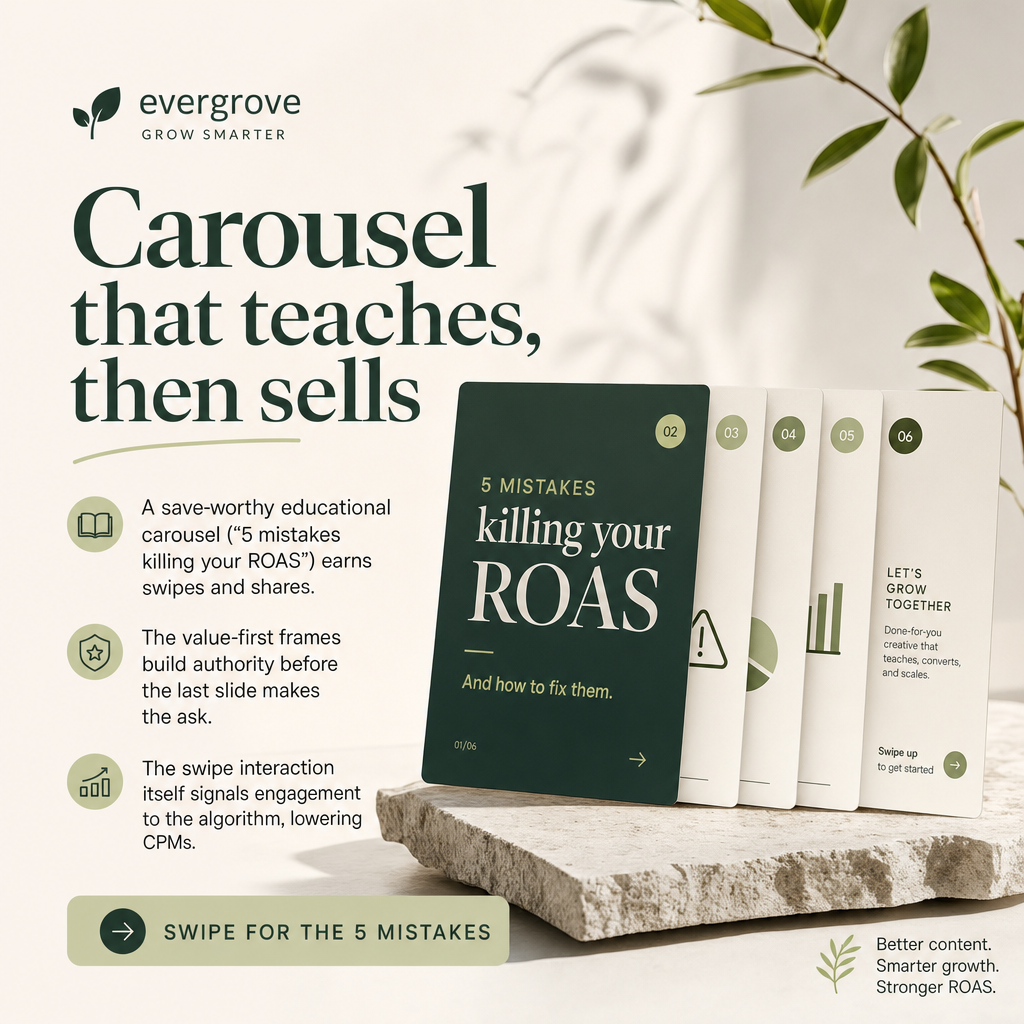
Educational ad example: Carousel that teaches, then sells

Carousel that teaches, then sells

Why it works: A save-worthy educational carousel ("5 mistakes killing your ROAS") earns swipes and shares, extending reach beyond the paid audience. The value-first frames build authority before the last slide makes the ask. The swipe interaction itself signals engagement to the algorithm, lowering CPMs.

Seen in Instagram Ad Examples
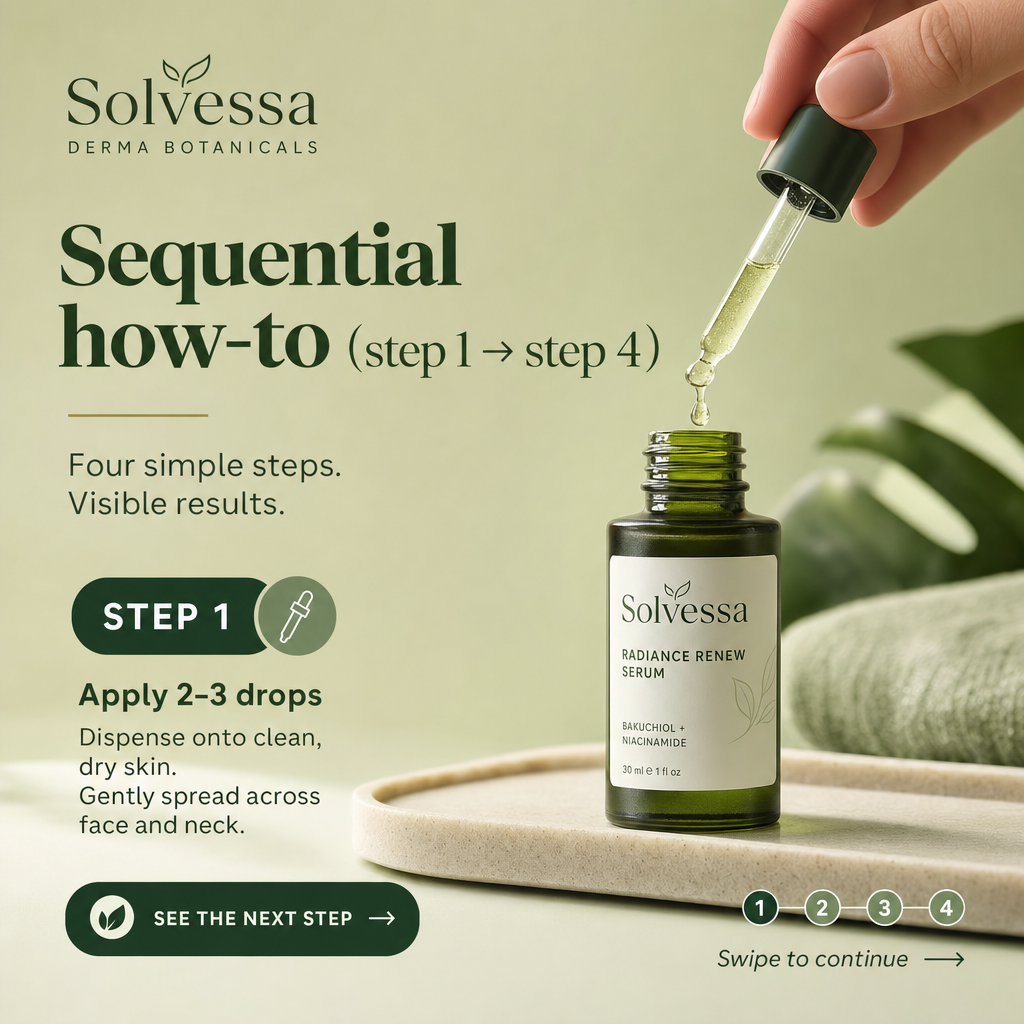

Educational ad example: Sequential how-to (step 1 → step 4)

Sequential how-to (step 1 → step 4)

Why it works: Numbered steps create an open loop — the viewer swipes to see how the process ends. Each card advances a small promise, so momentum builds toward the final CTA card. It also demonstrates the product in use, which pre-empts "how does this actually work" objections.

Seen in Carousel Ad Examples
Educational ad example: Myth vs. fact swipe

Myth vs. fact swipe

Why it works: Alternating a common misconception with the correction sets up tension the viewer wants resolved, driving the swipe. It positions the brand as the credible authority while gently disqualifying competitors' claims. The last card converts the newly educated viewer with a clear next step.

Seen in Carousel Ad Examples
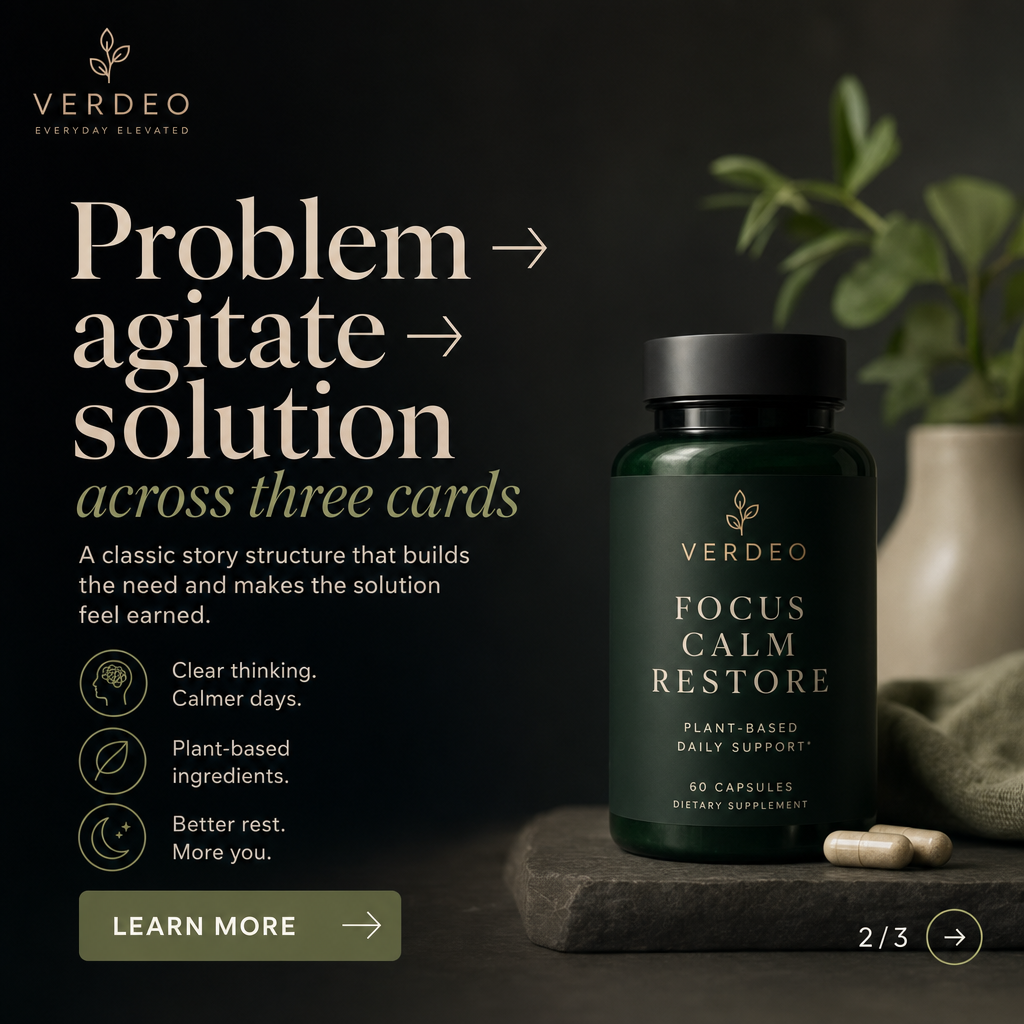
Educational ad example: Problem → agitate → solution across three cards

Problem → agitate → solution across three cards

Why it works: Spreading a classic copy structure across cards gives each beat room to breathe and paces the persuasion. The middle agitation card deepens the felt need before the solution lands, making the offer feel earned. This structure suits considered purchases where one image can't carry the argument.

Seen in Carousel Ad Examples
Educational ad example: Quick product demo in 5 seconds

Quick product demo in 5 seconds

Why it works: A fast, punchy demo shows the product actually working, which converts skeptics better than claims. Vertical framing keeps the product large and legible on a phone. The final frame freezes on the benefit plus a clear CTA for anyone who watched to the end.

Seen in Story Ad Examples

Want educational ads made for your brand?

statie.sh researches your brand and competitors, then ships on-brand static ads — in this style and others — to your inbox or Slack every morning. One click ships the finished image.

Start generating ads

Frequently asked questions

Why do educational ads work?

They build trust by giving value first. Teaching something useful positions the brand as a credible authority and reframes the problem so the product becomes the obvious solution, all before making an ask.

What makes a good educational ad?

Real, specific insight the audience actually wants — a myth corrected, a mistake avoided, a process explained. Save-worthy value earns engagement and longer watch time; thin 'tips' that just tee up a pitch don't.

Do educational ads convert or just build awareness?

Both, if structured well. Value-first frames build authority, and a clear final ask converts the newly educated viewer. Formats like carousels and how-tos let you teach and then sell in the same unit.

More techniques

Browse all ad examples